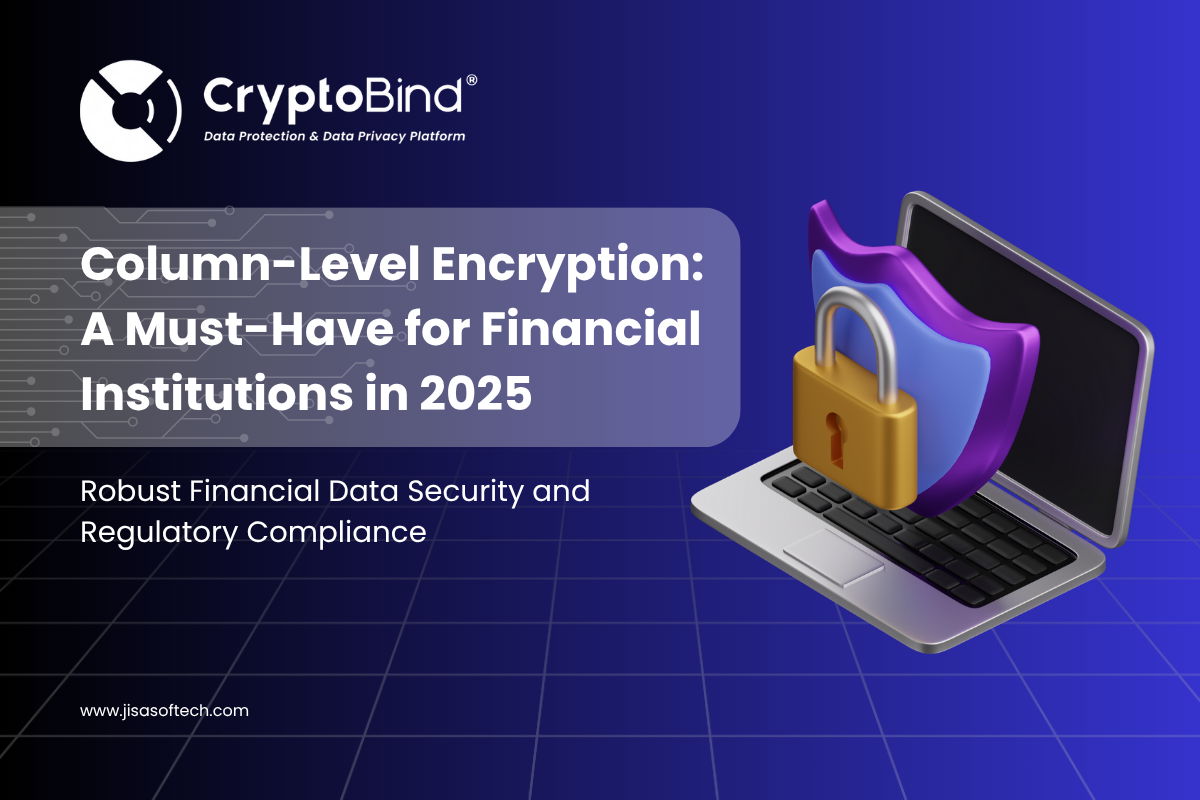
Column-Level Encryption: A Must-Have for Financial Institutions in 2025
In the very dynamic financial world of 2025 which is transforming at a breakneck speed, protection of sensitive information has come to be a base of operational integrity. Financial institutions that house large scale sets of sensitive data see also an increase in cyber security attacks and regulatory oversight. In that environment Column Level Encryption has come forth as a key solution for financial data security. As opposed to traditional encryption methods that go over whole data sets, column level encryption provides fine tuned protection that which fits the special needs of financial organizations. This report looks at why in 2025 financial institutions must put in place this which is at the forefront of advanced encryption strategies in order to secure their business and keep the trust.
Understanding Column-Level Encryption
Column-level encryption aims to secure certain database columns, such ones containing sensitive information like credit card numbers, transaction histories, and Social Security numbers. This method ensures that only authorized users or apps have access to encrypted data, even if other database parts are damaged.
Full-disk or file-level encryption protects data at a higher abstraction level; column-level encryption targets specific flaws. This technique enables companies to protect sensitive data without compromising database performance by cutting unnecessary encryption overhead and streamlining access controls.
The Growing Threat Landscape for Financial Institutions
Financial institutions in 2025 are prime targets for cyberattacks due to their valuable data troves and financial stakes. Data breaches in this sector can lead to catastrophic consequences, including financial losses, reputational damage, and regulatory penalties. Some prevalent challenges include:
Evolving Cyber Threats: Cybercriminals continually refine their tactics to breach even the most secure systems.
Insider Threats: Unauthorized access by employees or third-party vendors poses significant risks.
Regulatory Pressures: Compliance with stringent regulations such as GDPR, PCI DSS, and CCPA is mandatory, with non-compliance resulting in severe penalties.
Data Volume Explosion: The proliferation of digital transactions amplifies the complexity of securing data.
In this high-stakes environment, encryption for sensitive information is not just a best practice; it is a necessity.
Why Column-Level Encryption is Crucial in 2025
1. Enhanced Financial Data Protection
Improved Financial Data Protection Even in the event of a database breach, sensitive financial data is protected by column-level encryption. For example, highly sensitive columns, like those that contain Personally Identifiable Information (PII), are encrypted to prevent unwanted access, while other columns might stay unencrypted for operational efficiency.
2. Optimized Database Performance
Improved Database Performance Encrypting whole databases can put a burden on system resources, which raises expenses and slows query performance. Financial institutions can achieve a balance between strong security and effective database operations by encrypting only the most sensitive columns.
3. Regulatory Compliance for Financial Data
Stricter data protection measures are being required by international financial regulations. Granular data security is made possible by column-level encryption, which directly promotes compliance. This approach is in line with the guidelines provided by different regulatory frameworks, which include limiting data exposure and guaranteeing that sensitive attributes are encrypted.
4. Mitigation of Insider Threats
Only authorised personnel can decrypt and view sensitive data thanks to column-level encryption, which makes role-based access controls possible. This considerably lowers the dangers posed by insider threats.
5. Future-Proof Security
As encryption algorithms evolve, column-level encryption provides financial institutions with the flexibility to update or change algorithms without overhauling their entire database infrastructure. This adaptability ensures long-term protection against emerging threats.
Implementing Column-Level Encryption in Financial Institutions
Step 1: Identify Sensitive Data
Conduct a thorough data inventory to identify columns containing sensitive information, such as account numbers, transaction histories, and customer PII.
Step 2: Choose the Right Encryption Algorithm
Select robust encryption algorithms, such as AES-256, that meet regulatory standards and provide strong protection against modern cyber threats.
Step 3: Integrate Encryption with Database Management Systems
Many modern database management systems (DBMS), including Oracle, Microsoft SQL Server, and MySQL, offer native support for column-level encryption. Leverage these capabilities to streamline implementation.
Step 4: Implement Access Controls
Combine encryption with role-based access controls to ensure only authorized users can decrypt sensitive columns. This reduces the risk of unauthorized access.
Step 5: Monitor and Audit Regularly
Establish robust monitoring and auditing protocols to detect unauthorized access attempts and ensure compliance with regulatory requirements.
Case Study: Successful Column-Level Encryption Deployment
Consider a global financial institution that recently adopted column-level encryption to address cybersecurity and compliance challenges. By encrypting columns containing PII and transaction data, the institution achieved:
- Improved Security Posture: Protected critical data from external and internal threats.
- Regulatory Compliance: Met requirements for data encryption under multiple international standards.
- Operational Efficiency: Maintained high database performance by encrypting only essential columns.
The successful deployment highlights the practical advantages and necessity of column-level encryption in modern financial operations.
Challenges and Solutions in Adopting Column-Level Encryption
While column-level encryption offers numerous benefits, implementation challenges exist:
- Complexity in Implementation: Encrypting specific columns requires precise identification and integration. Solution: Conduct thorough planning and leverage automated tools to simplify the process.
- Key Management: Securely storing and managing encryption keys is critical. Solution: Employ advanced key management systems (KMS) to mitigate risks.
- Performance Overheads: Encryption can impact database speed. Solution: Optimize encryption by targeting only high-risk columns.
- Staff Training: Employees must understand encryption practices. Solution: Regular training sessions to keep staff updated on secure database practices.
The Road Ahead: Prioritizing Data Security
As financial firms keep functioning in a more digitalized and controlled environment, column-level encryption will only grow more important. By using this tailored method of database encryption, companies can guard sensitive information, preserve operational efficiency, and assure compliance.
Cybersecurity calls for unceasing commitment instead of a one-off effort. Financial institutions should prioritize column-level encryption, among other encryption techniques, to stay ahead of the cyber security competition in 2025 and beyond. The financial sector can rise to the challenge given robust procedures and modern technology, albeit with great stakes.
Conclusion
For financial institutions in 2025, column-level encryption is a strategic necessity rather than an choice. Financial organizations can improve their data protection systems, meet regulations, and lower risks by locking the most sensitive sections of a database. Column-level encryption will still be a pillar of secure database techniques as the cybersecurity scene transforms, so guaranteeing that the financial sector works with integrity and trust.