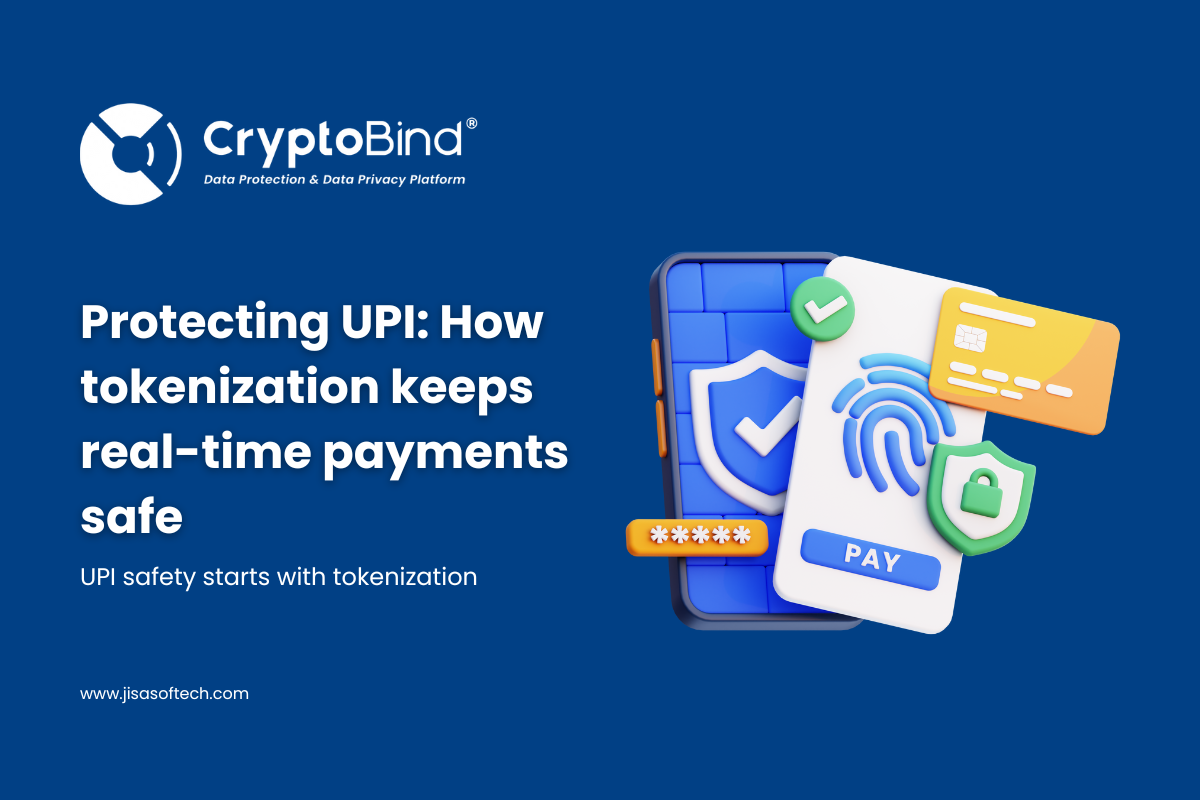
Protecting UPI: How Tokenization Keeps Real-Time Payments Safe
The Unified Payments Interface (UPI) is the pulse of India’s Digital Economy with more than 13 billion transactions per month (as of mid-2025) and is only a few years old. However, with the explosion in the volume and value of real-time payments, the risks increase as well. Phishing, man-in-the-middle, and other types of fraud via UPI are causing great concern, and its prevention has become one of the priority directions. The answer is one that is on top of the security stack: UPI tokenization.
Fast fact, In this article we have a look at what UPI tokenization is, how it enhances security of real-time payments and why it is becoming such an important digital payment security infrastructure in India.
What is Tokenization in the Context of UPI?
In essence, tokenization is a method of cybersecurity that substitutes sensitive data, i.e., a bank account number or a virtual payment address (VPAs) with some unique randomized values. The same tokens are of no use when intercepted as they will have no value on the outside payment environment.
To the UPI security, it implies that rather than a user sending his or her actual bank details or UPI ID when making a transaction, a token as a temporary alias is sent over the network. Reversing the mapping of the token to real information is possible only by using the token vault (i.e. a secure backend service), and not by any client. Therefore customer privacy is guaranteed.
Why Tokenizing VPA and Account Data is Essential
UPI system was designed to be open and fast. However, that openness is accompanied by vulnerability as, with the increasing number of merchants, applications and fintech connecting with the UPI platform, there will be an increased potential to conduct doorstep thefts. Here’s where tokenization adds critical value:
- Mitigates data theft: Tokenized VPAs make stolen payment credentials worthless.
- Reduces attack surface: Since real data is not shared or stored outside the user’s bank/PSP, the risk is significantly minimized.
- Enables regulatory compliance: The RBI tokenization mandate, extended from card payments to UPI systems, reflects the importance of secure architecture in digital infrastructure.
Under the Hood: How UPI Tokenization Works
Let’s break down the flow:
- Token Request: When a user initiates a transaction, their app requests a token from a central token service provider (TSP).
- Token Mapping: The TSP generates a random token and securely maps it to the user’s actual VPA or account.
- Secure Transmission: This token is then passed through the payment gateway encryption layer to the recipient.
- Detokenization at Bank Server: On the backend, the bank or TSP validates the token, maps it back to the real identifier, and processes the transaction.
- Logging & Expiry: Tokens can be single-use or time-bound, adding layers of dynamic security.
Real-World Scenarios: Tokenization in Action
1: QR Code Fraud at Local Retailers
A fintech company in Mumbai had witnessed an upsurge in UPI fraud, in which the attackers substituted the merchant QR code with those of their choice. Under tokenization, the UPI ID of the user is not revealed in case the QR code has been fiddled with. Such a transaction is reversible and trackable because tokens correspond to credentials that are linked to devices.
2: Compromised Aggregator Apps
During a breach in 2024, one of the most popular bill payment apps turned out to be logging VPAs in plaintext. The app integrated tokenization after the breach, and in case of having logs hacked, the actual account information remains unavailable.
Tokenization vs Encryption: Complementary, Not Competing
Although tokenization and encryption offer security to the data, they are used in different ways. Encryption makes data unrecognizable when in transit and can only get decrypted with keys. In tokenization, however, the data are replaced completely. A combination of both can build a defense-in-depth security strategy that is critical in mobile payment security and fintech cybersecurity.
The Business Case: More Than Just Compliance
It’s easy to see UPI tokenization as a checkbox for regulators. But in reality, it’s a powerful enabler for:
- Merchant Trust: Companies that handle transactions worth millions using UPI must be reassured they are not putting the customers at risk.
- User Experience: The fast approvals and the decreasing number of the declined transactions, as the risk engines will be working using cleaner, anonymized data.
- Brand Protection: No fintech desires to go in news put offs. Upi protection is now an issue in the boardroom.
What Fintechs and Banks Must Do Next
- Integrate with TSPs: Use RBI-approved token service providers and align systems with token lifecycle management best practices.
- Secure the Token Vault: Centralize but strengthen the storage of tokens with authorized consumption of tokens, audit and intrusion detection.
- Educate Users: Consumers need to know their UPI IDs are protected, but also how to recognize social engineering and phishing threats.
Final Thought: Security is the New UX
UPI safety will establish the most secure guidelines as India moves on to a cashless economy. Tokenization is not just backend plumbing, it’s a public commitment to safety in every swipe and scan. When digital payment security is the competitive edge in the era, tokenization is not an option anymore, it is the core.