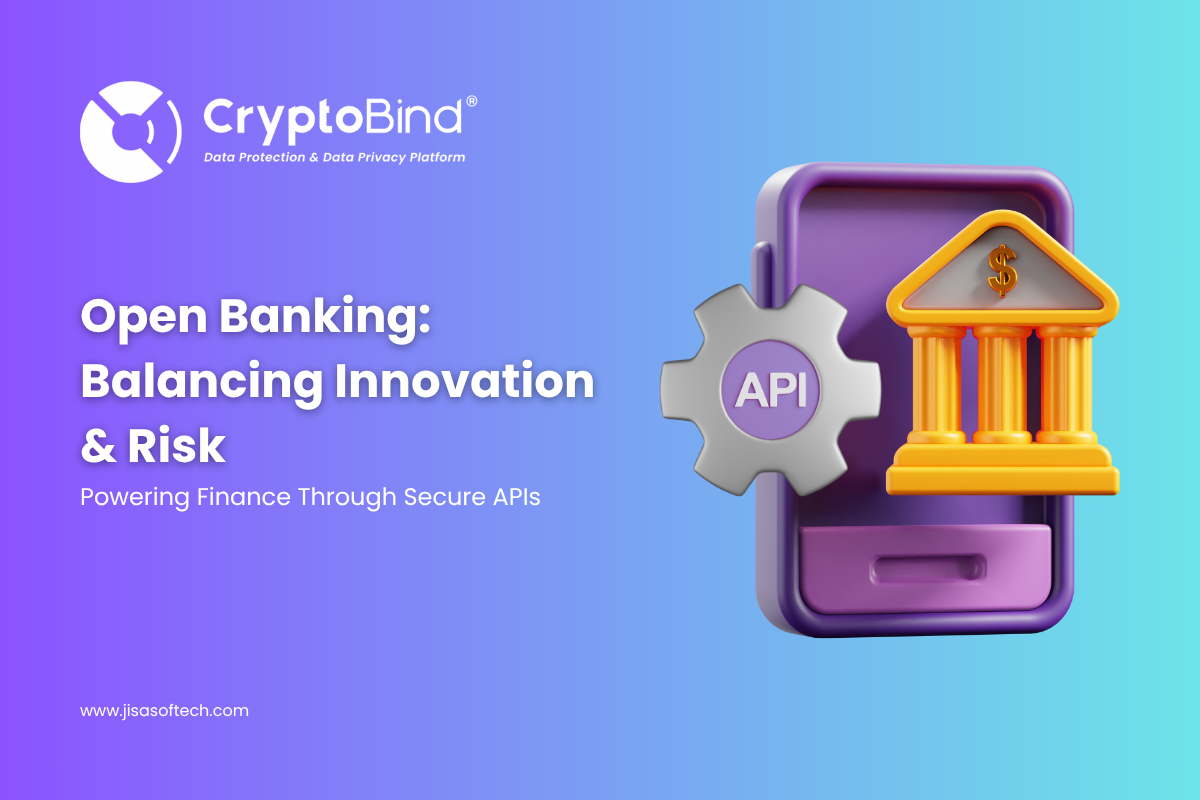
Open Banking: Balancing Innovation & Risk
With the changing needs of customers and the emergence of an increasingly digital financial service industry, Open Banking has become a game-changing phenomenon that reconstitutes the course of business, as well as redefines the service to customers. By means of Banking APIs and under inspirations of regulatory measures on the global level, this model allows safe sharing of data of the traditional bank with third party providers to facilitate intelligent, user defined financial solutions. It enables banks to provide highly personalized financial management services, process credit and lending decisions automatically and inculcate financial services in daily use digital platforms easily. These innovations are causing banks to shift their operational and business models as standalone institutions towards becoming a collaborative platform in a dynamic and interconnected financial ecosystem, a more nimble and responsive, diverse ecosystem.
The Promise of Open Banking
Open Banking enables third-party providers (TPPs) to access customer financial information on standard banking APIs. This paradigm shift is unlocking new value streams through:
- Personalized financial management tools
- Automated lending and credit scoring platforms
- Embedded finance in non-banking applications
- Aggregated dashboards for cross-account visibility
Banks that adapt to API banking are no longer just institutions; they are platforms within a dynamic financial ecosystem, offering modular services and enabling innovation at scale.
The Risk Landscape: APIs as a Double-Edged Sword
APIs offer interoperability and fast-and-fluid development in digital financial services, but they also increase cyber exposure. In the absence of security, an API can expose endpoints in a poor fashion and, as a result, lead the way to sensitive data loss, identify theft, and regulatory fines.
Fintech cybersecurity is no longer a back-office issue, but a major hall in the boardroom. As more and more personal identifiable information (PII) is transmitted with fintech banking from customers through the open API mechanism, banks must begin to proactively manage some of the foundational risks associated with APIs, such as, unauthorized access, credential leakage, lack of API governance, fails to authenticate, and real-time fraud detection. These risks must be addressed to preserve trust for future innovation in the Open Banking ecosystem.
API integrations are open, which requires us to move from security processing frameworks with perimeter-based enterprise security models to a zero trust, API first security posture.
Strategies to Secure Customer PII in Open Banking
Securing Personally Identifiable Information (PII) in an open and interconnected landscape requires a multi-layered security posture. Here are the key strategies banks must adopt:
1. Adopt Strong API Governance Frameworks
An effective API governance model establishes policies for API lifecycle management, including design, documentation, versioning, and deprecation. It enforces:
- Centralized API registration and discovery
- Strict access control through API gateways
- Continuous monitoring for usage anomalies
This not only ensures compliance with regulations like GDPR and RBI’s guidelines but also prevents shadow APIs from exposing sensitive data.
2. Implement Robust Data Encryption in APIs
Encryption is the foundation of data breach prevention. Banks must encrypt PII in transit and at rest, utilizing industry standards such as TLS 1.3 and AES-256.
Additionally, adopting tokenization and data masking techniques ensures that even if data is intercepted, it remains unintelligible and unusable.
3. Use Secure Authentication & Authorization Protocols
Current API banking requires solid identity verification mechanisms. OAuth 2.0 APIs use successful and secure delegated access with access tokens, OpenID Connect APIs have the verification of the user, and Multi-Factor Authentication (MFA) adds another level of assurance to verification of identity. Collectively, we can account for who is accessing sensitive customer PII data, and, if they have sufficient permission, then permission is granted on consent of the user to give trust in a controlled and auditable manner.
4. Embed Real-Time Threat & Fraud Detection
Banks must put money into the use of AI and machine learning for real-time fraud detection systems. These systems actively monitor transaction trends and flag questionable transactions. Additionally, they will execute automated threat responses. For example, if a bank gets an API call from a different geolocation or a volume of data requests requiring API access that seems out of the ordinary, they could initiate an automatic lockdown that would minimize damage.
5. Conduct Continuous API Security Testing
API security testing is implemented continuously as part of the DevSecOps cycle, and includes the use of penetration testing, fuzz testing, and code analysis. In terms of methods, this proactive approach can help banks and other organizations identify vulnerabilities in their environments and remediate them before they can be exploited.
Building a Secure, Scalable API Infrastructure
Scalability and security can and must go hand in hand. Banks must rethink infrastructure design with security baked into every layer:
- API Gateways act as the first line of defense, enabling rate limiting, authentication, and payload inspection.
- Microservices architecture allows isolation of services and limits blast radius in case of breaches.
- Logging and auditing of every API call ensures traceability and accountability.
- Secure DevOps (DevSecOps) culture enables early threat modeling and agile security practices.
Such a setup not only accelerates API integration in banks but also ensures resilience against evolving threats.
Regulatory Compliance: A Catalyst for Responsible Innovation
Global regulatory frameworks are increasingly shaping the future of Open Banking. Initiatives like:
- PSD2 in Europe
- UK Open Banking Standards
- RBI’s Account Aggregator Framework in India
mandate secure API-based access to banking data while requiring banks to ensure customer consent, privacy, and security.
Compliance isn’t just a checkbox—it’s a catalyst for trust-driven innovation. Banks that align with these standards signal their commitment to protecting customers and gain a competitive edge in the trust economy.
Collaboration: The Cornerstone of Open Banking Security
Secure Open Banking requires building strong connections and cooperation amongst the broader financial ecosystem. Banks will need to work closely with fintech and all digital services partners to develop adequate security protocols and they will work with regulators to comply with any regulatory requirements. Partnering with security vendors will also give banks access to cutting-edge tools and expertise for anticipating and understanding emerging threats. Participation in shared threat intelligence networks and industry forums will allow financial institutions collectively to enhance the cybersecurity posture in fintech, ensuring new innovations can be built from a “trust” layer up!
The Road Ahead: Trust as a Differentiator
Future finance is open, smart and connected. Exposure can only be costly without security. In case with banks, the formula is elementary:
Open Innovation + Secure Infrastructure = Sustainable Trust
The DNA of an API strategy is a way in which banks have to integrate PII protection strategy with the goal of surviving in this developing environment. Whether it is data encryption in APIs, real-time-fraud detection, or any other layer, its involvement must show a demonstration of zero-tolerance to customer privacy.
The threats will change as the API ecosystems will change. However, when governance is proactive, architecture architected with security, innovation is ethical, then Open Banking potentially delivers on the promise not only as a disruptor, but one that brings trust, transparency and financial empowerment.
Conclusion
Open Banking is a generational chance to redefine how financial services will be performed. Through the adoption of a security-first approach to API banking, banks will be able to push the innovations without having to lose the trust of their most prized possession, their customers.
Innovation of boldness and fiercely protection will be more than ever important to guarantee success.