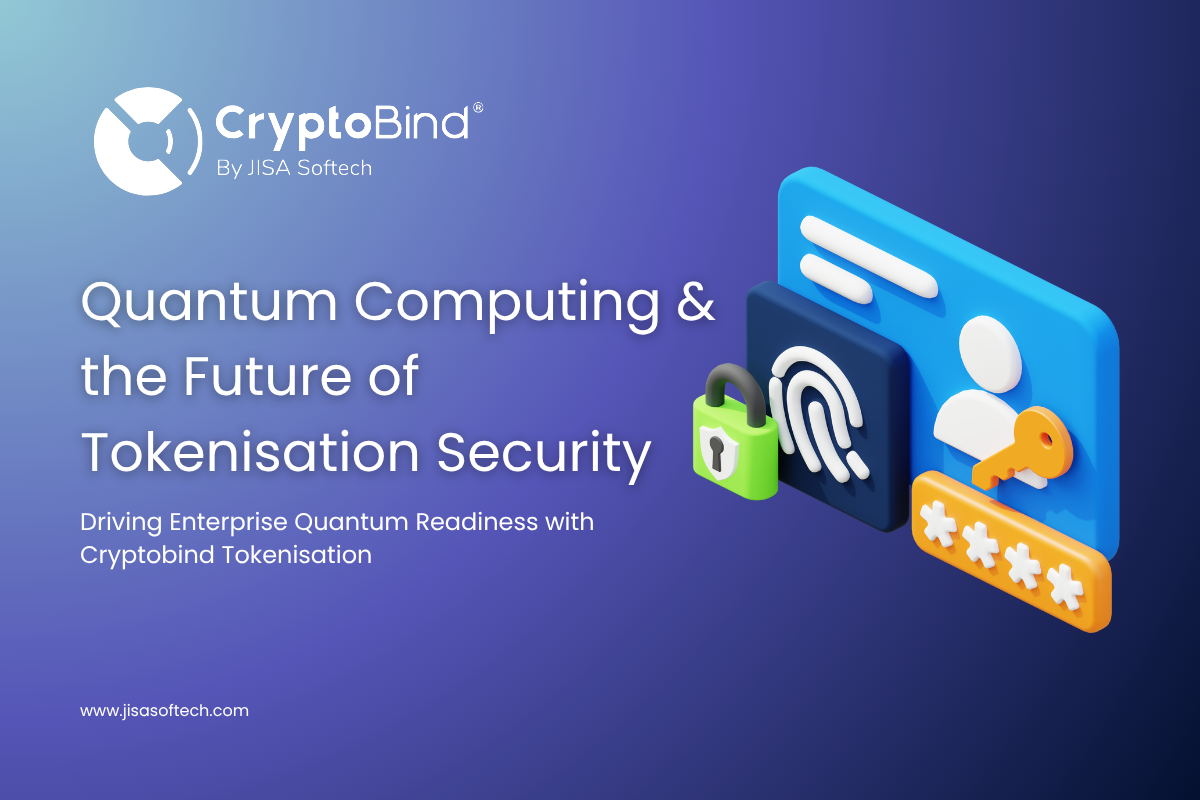
Quantum Computing & the Future of Tokenisation Security
The world of digital economy is becoming more and more uncertain with the balance between innovation and security becoming precarious. Previously viewed as a sophisticated data protection method, tokenization now has an unprecedented disrupter: quantum computing. Although tokenization has traditionally been the focus of securing sensitive data such as payment data, healthcare records and identity credentials, the emergence of quantum technologies threatens the very basis of cryptography.
Whether quantum will transform tokenisation, security is no longer a question in front of modern CISOs and enterprise architects but when and how ready we are for that change.
The Quantum Paradigm Shift
Quantum computing is a radical shift in classical computational constraints. Contrary to the traditional bits which depict information as either 0s or 1s, quantum bits (qubits) are allowed to be in several states at the same time by superposing and entangling. This provides quantum systems with the capability to solve complicated mathematical tasks exponentially in comparison with conventional computers.
This power is a two-sided sword as far as cybersecurity is concerned. Modern encryption algorithms such as RSA and ECC are also subject to breaking the algorithms of Shor, which can be executed on a quantum computer powerful enough. Decades to centuries-old systems of classical systems could be decoded in hours.
Not immune is tokenisation which is based on encryption and the management of secure keys. Although the tokens themselves are non-sensitive substitutes, the tokenization systems that produce and map them even the vault-based tokenization systems, also rely on cryptographic security, which in a post-quantum world may be subverted.
Tokenisation in Today’s Security Landscape
The usefulness of tokenisation is based on its simplicity and effectiveness. It reduces exposure since it uses non-sensitive tokens instead of sensitive data and allows it to remain operational. Two primary models dominate:
- Vault-Based Tokenisation –Tokens are sent to a secure database or vault. Encryption, access control, and vault integrity are the keys to the security of this system.
- Vaultless Tokenisation – Eliminates the need for a central vault by using deterministic algorithms or cryptographic functions to generate tokens dynamically. This model reduces risk from centralized data breaches and improves scalability.
Both models are certified and meet international standards of such security measures as PCI DSS, GDPR, and DPDP. They are, however, as vulnerable as their cryptographic algorithms, most of which may be phased out as soon as quantum computing becomes a feasible aspect of life.
The Quantum Threat to Tokenisation
Although quantum computers able to crack commercial encryption have not been made publicly available yet, the risk of the so-called harvest now, decrypting later is real. Attackers are able to store encrypted information now that they are aware that quantum-based systems will be able to decrypt such information with relative ease in the future.
This presents a special dilemma on tokenisation systems. In case the cryptographic algorithm employed to create or protect tokens can be affected by quantum attacks, the basis of the whole tokenisation system collapses. The latter is especially vulnerable to the systems based on vaults as the latter also has mappings that may be decrypted under the conditions that quantum algorithms will break the current protection.
To be useful, tokenization needs to be developed into quantum-resistant and crypto-agile designs, which should provide a smooth transition to new algorithms and changing threats.
Enter the Era of Quantum-Ready Tokenisation
The organizations that think long term are now reinventing tokenisation in quantum terms. This model is called quantum-ready tokenization, and the primary concerns are three principles:
- Quantum-Resistant Algorithms: Switching to post-quantum cryptographic (PQC) algorithms with resistance to quantum computer attacks. These are lattice-based, hash-based, and multivariate quadratic algorithms which are standardized by NIST.
- Crypto-Agility: Designing tokenization infrastructure that is capable of changing cryptographic primitives and is not architecturally redesigning. This is the one that will make it sustainable in the long run as new PQC standards come out.
- Zero-Vault Architectures: Emphasizing vaultless tokenisation to minimize single points of failure, eliminate vault breaches, and improve compliance in distributed systems.
This development will not only turn tokenization into a dynamic, adaptive trust layer, but it is capable of protecting against more than merely the present-day cyber threats it can also protect against the future cryptographic disruptions of the future.
How CryptoBind is Pioneering Quantum-Ready Tokenisation
CryptoBind is becoming a pioneer in the redefinition of enterprise data protection in the quantum era, in this changing environment. Its quantum-ready tokenization platform is an integration of profound crypto-cryptographic innovation and operational ease that guarantees that organizations remain not just ahead of regulatory disruption but also technological disruption.
The most significant feature of CryptoBind tokenisation is a balanced mix between the reliability of vaultbased tokenisation and the flexibility of vaultless tokenisation, which gives the enterprise the freedom to select based on their risk and compliance posture. CryptoBind is not based on classical algorithms, as opposed to the traditional tokenization systems, but incorporates quantum-resistant algorithms to protect future-proof data security.
The architecture of cryptoBind is founded on crypto-agility and interoperability, which allows the architecture to be easily updated when new PQC standards are introduced. Its modular design enables organizations to move gradually to quantum-safe infrastructure without disrupting current business processes.
In addition to technology, the philosophy of CryptoBind is in line with the larger trend of trust by design, where security, privacy and compliance are not responsive features, but a part of digital resilience.
The Broader Implications for Data Protection
Quantum-ready tokenisation is not a technical upgrade, but a strategic necessity. Due to the connection of digital ecosystems, data security is transforming into the foundation of trust in the enterprise and customer confidence.
Quantum breach would not only breach data, but it would topple whole industries that are based on the principle of cryptographic trust. Monetary institutions, governments, and healthcare dispensers, which rely on tokenized information transfers, are the most urgent. The quantum-safe tokenization transition is not an option but a necessity.
Proactive CISOs are already considering quantum risk assessment in their cybersecurity strategic plan. This involves counting cryptographic resources, calculating exposure, and implementing quantum-compatible tokenization and key management frameworks.
Building the Path to a Quantum-Safe Future
Enterprises must aim at accomplishing four strategic steps in order to make a smooth transition:
- Evaluate Cryptographic Dependencies: Diagram all the systems that depend on classical encryption such as tokenization systems, HSM systems, and KMS systems.
- Implement Crypto-Agility Frameworks: Make sure that there is the ability to facilitate various algorithms and can transition without causing significant downtime..
- Pilot Post-Quantum Solutions: Experiment with PQC-ready tokenization tools like CryptoBind to evaluate performance, compliance, and integration.
- Collaborate for Standards Alignment: Engage with vendors, regulators, and standards bodies to align on PQC adoption timelines and interoperability.
Such a proactive solution does not only reduce the impact of quantum risks but also enhances the earlier adoption of new data protection regulations, which focus more on the proactive approach to security.
The Future: Tokenisation Beyond Quantum
Over the next ten years, tokenisation will not only become a strategic value-creator of trust in digital ecosystems but also transform into a strategic tactic of compliance. The combination of tokenization, PQC, and distributed identity systems will transform how sensitive data is handled by organizations.
Quantum computing is something that should not be feared but an incentive to innovate. It is pushing businesses towards the re-establishment of the cryptographic bases of trust, more robust, intelligible, and future-resistant.
The way to a quantum-safe digital economy is becoming clearer as such pioneers as CryptoBind keep enhancing quantum-ready tokenization. As a defense mechanism, tokenization is currently shifting to an adaptive, intelligent trust process, a process that can earn the most valuable currency of the digital era data.