Why HSMs Are Foundational to Digital Trust
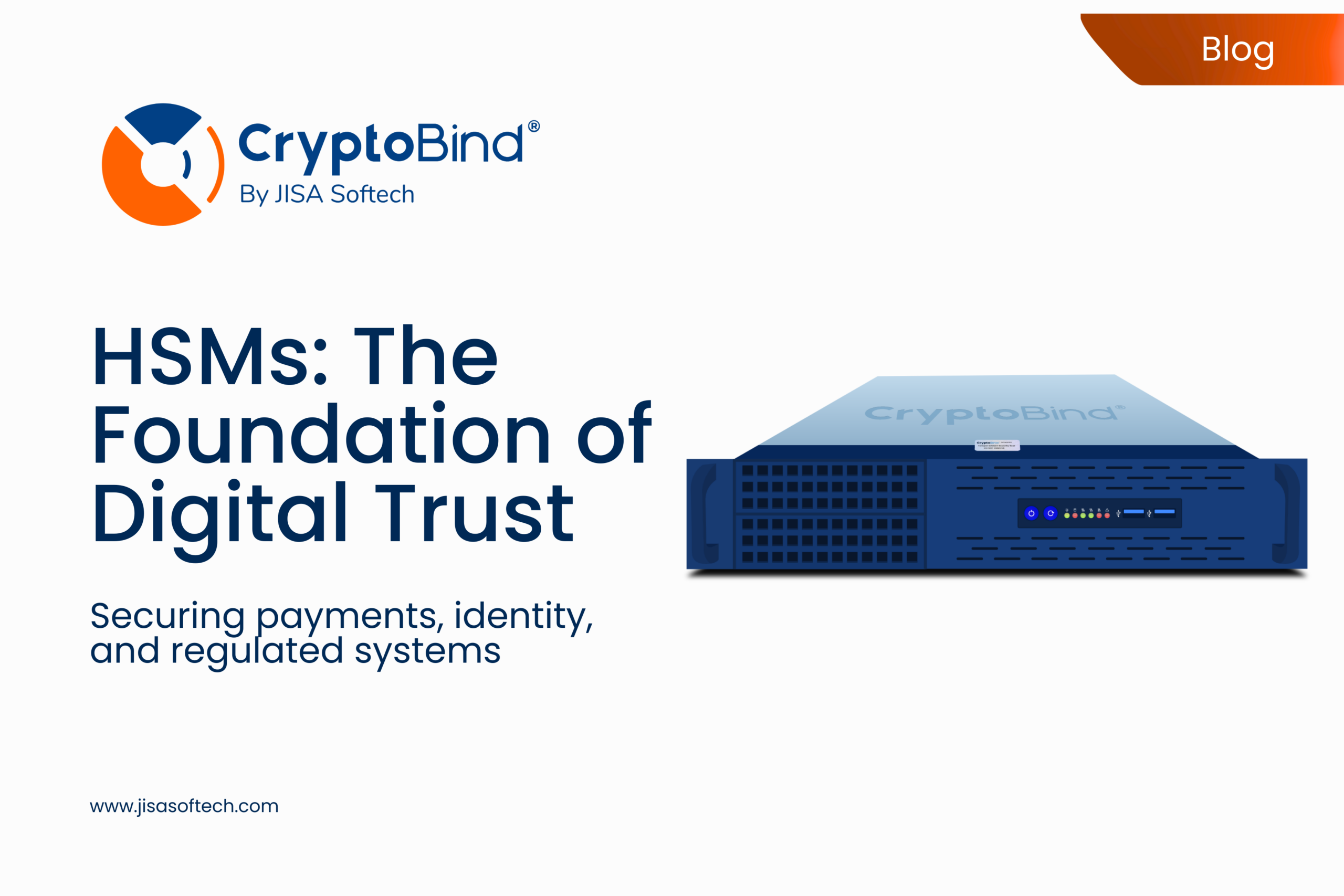
The digital trust is not a theoretical notion anymore, it is the currency of the contemporary economy. All online transactions, identity checks, signature of a contract, and any regulated transaction rely on a single attestation known to no one, but of great importance: cryptographic keys were created, stored, and consumed in a secure manner. With the advanced cyber threats and the prospect of quantum computing in the future horizon, Hardware Security Modules (HSMs) are now the building block to maintain scale-based trust.
HSMs are not just security devices. They are trust anchors for digital ecosystems.
Table of Content
Digital Trust Begins with Cryptographic Control
Payments: Securing the Global Flow of Value
Identity: Protecting Who We Are in a Digital World
Regulated Environments: Compliance Meets Resilience
The Quantum Shift: From Secure to Quantum-Ready
Thought Leadership Perspective: Trust Is Infrastructure
Digital Trust Begins with Cryptographic Control
Digital trust at the most basic level is based on cryptography, encryption, signing, authentication and integrity validation. However, cryptography is as good as its key management. Even encrypted key storage on software is susceptible to memory scraping, insiders and advanced malware.
This is solved with a Hardware Security Module which isolates the cryptographic operations on tamper-resistant hardware. The keys are generated, stored and used within the HSM and are never put in cleartext. This renders HSMs as the foundation of enterprise key protection, as even in the event of a breach of systems, the cryptographic root of trust will be preserved..
In regulated and high-risk environments, this distinction is not optional; it is mandatory.
Payments: Securing the Global Flow of Value
One of the most challenging trust environments in the world is the payments ecosystem. Hundreds of transactions per second are required to be made on card networks, real-time payment rails, wallets, and digital banking platforms and comply with strict regulatory norms, including PCI DSS.
In this case, FIPS-certified HSMs will be highly important. They support the generation of secure keys, encryption of pin, tokenization, and signing of transaction on a scale. The new Cloud HSM solutions allow this to reach cloud-native payment platforms without loss of control or compliance.
Real-world scenario:
When a digital bank is expanding to new markets, it uses a scalable HSM appliance to facilitate instant payments. Through centralisation of cryptographic operations, the HSM ensures that the bank maintains uniform security control over on prem and cloud based systems and also satisfies the PCI and local regulatory requirements, despite peak season spikes in volumes of transactions.
This is where performance is important. An example is the CryptoBind HSM performance, which is not only able to support high-throughput cryptographic loads without creating a bottleneck but is also necessary in payment infrastructures today.
Identity: Protecting Who We Are in a Digital World
Everything depends on digital identity systems, such as eKYC and eSignatures, national ID programs, and zero-trust access to enterprises. Hacked Identity keys may result in structural attacks, frauds, and defeat of trust in the system by citizens or customers.
HSMs provide HSM to sign digital, protect certificate authority, as well as secure authentication services. They make sure that the private keys employed in issuing identities, validating identities or signing documents are secure against theft and misuse.
Real-world scenario:
The HSM is used to protect keys to a root and issuing CA used in a government-supported digital identity platform. In case of application server breach, attackers are unable to steal identities or issue certificates, which maintain trust in the rest of the ecosystem.
In the age of deepfakes and identity theft, hardware-id has ceased being a luxury, a technological necessity of society.
Regulated Environments: Compliance Meets Resilience
The financial services, healthcare, telecom and critical infrastructure sectors are considered under stringent regulatory control. Regulations are getting more and more explicit that it requires not only encryption, but also provable control over cryptographic keys.
HSMs offer cryptographic policy enforcement which is auditable. Role-based access, secure key lifecycle management and tamper evidence are some of the features that assist organisations demonstrate compliance at minimised operational risk.
More critically, HSMs transform security into a posture of resilience, instead of a posture of reactivity, i.e. trust is not added to the system, but it is engineered into the system.
The Quantum Shift: From Secure to Quantum-Ready
Although the current HSMs are resistant to the classical threats, quantum computing is the challenge of tomorrow. Adversaries with quantum capabilities have the potential to subvert public-key encryption algorithms that are being used on a large scale, compromising the concept of digital trust on a primary level.
It is the reason why Post-Quantum HSMs and Quantum-Ready HSMs are taking on the status of strategic priorities. A PQC-Enabled HSM is post-quantum enabled, crypto agile and hybrid-cryptography featuring: enterprises can switch to new standards as standards change smoothly, crypto agility and hybrid cryptography.
A Crypto Agile HSM will allow organisations to:
- Implement quantum resistant key management.
- Implement hybrid cryptography HSMs based on classical and PQC algorithms.
- Non-hardware update cryptographic policies.
This flexibility is essential to future-proof cryptography hardware and long-term regulatory congruency.
Thought Leadership Perspective: Trust Is Infrastructure
Digital trust must be viewed similarly to critical infrastructure, which is crafted to be long-term, resilient and flexible. HSMs are not strategic security instruments; they are tactic enablers of trust within the spaces of payments, identity and controlled systems.
With businesses adopting cloud, APIs, and machine workflows, the cryptographic boundaries are being erased. The trust has to come closer to the information and keys securing it. The next generation cryptography hardware, e.g. Quantum-safe encryption hardware, HSMs using PQC algorithms, is the next step in the development of security architecture.
The performance, compliance and quantum readiness can be fused into one trusted base as seen in platforms such as CryptoBind HSM, satisfying the needs of today and preparing to meet the dangers of tomorrow.
Conclusion
Trust is something that cannot be presupposed in the world where digital interaction is the defining feature of economic and social advancement. The Hardware Security Modules are the unchanging nuggets of such trust and they cover the cryptographic keys used to protect the payments, identities and the regulated settings.
With quantum risks arriving and digital ecosystems growing, organisations that make early investments in scalable and crypto-agile, and quantum-ready HSMs will not merely comply, but will be at the forefront confidently. In the digital trust, promises, however, are not made. It is built on hardware.