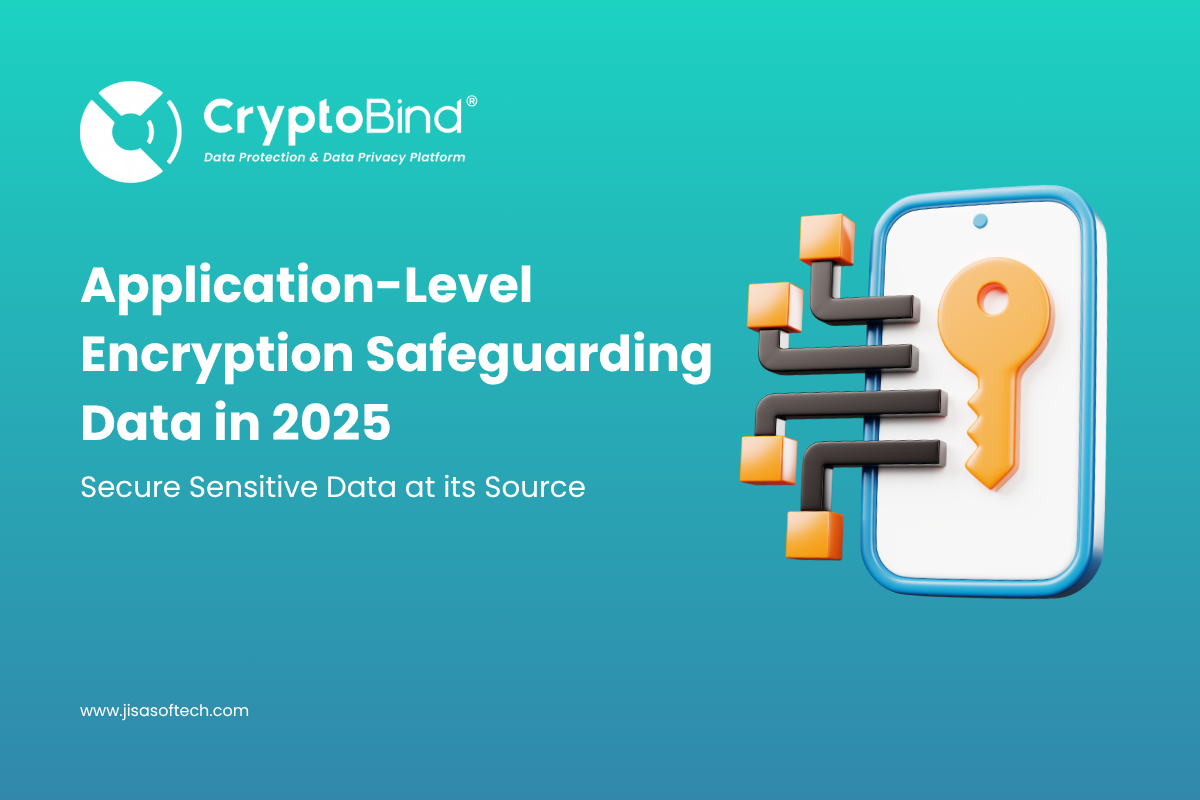
How Application-Level Encryption Protects Sensitive Information in 2025
Sensitive data protection is more important than ever in the quickly changing digital world of today. Traditional data security techniques frequently fail to provide strong defences against cyberattacks, which are becoming more frequent and sophisticated. Here comes application-level encryption, a state-of-the-art method of protecting private data by encrypting it at the application layer. Application-level encryption has emerged as a key component of contemporary information protection strategies in 2025 as privacy and data security become more and more important to both individuals and enterprises.
Understanding Application-Level Encryption
The process of encrypting data inside an application prior to storage or transmission is known as application-level encryption. Application-level encryption guarantees that data is secure from the time it is created or processed, preserving its security throughout its lifecycle, in contrast to network-level or disk-level encryption. Granular control is provided by this method, which enables field-level encryption—the encryption of particular fields or data sets—to guarantee that private data is safe even in the event that the system as a whole is compromised.
Essential Elements of Application-Level Security
Encryption on the client side: Before being transmitted to the server, data is encrypted on the client side to reduce the possibility of security breaches.
Granular Control: Provides for the selective encryption of particular data fields, guaranteeing that sensitive data is better protected.
End-to-End Encryption: Ensures that data remains encrypted from its source to its destination, leaving no gaps in protection.
Why Sensitive Information Needs Application-Level Encryption
Protecting sensitive data is of utmost importance due to the exponential growth of data usage and the growing dependence on cloud-based systems. Serious financial losses, harm to one’s reputation, and legal ramifications can result from data breaches. To allay these worries, application-level encryption provides:
Defence Against Insider Threats: Sensitive information is protected from unwanted internal access by application-layer encryption.
Observance of the Rules: Strong encryption procedures are required by numerous data protection laws, including GDPR and HIPAA, to safeguard sensitive information. Businesses can meet these requirements with the aid of application-level encryption.
Resilience to System-Level Attacks: Without the proper encryption keys, encrypted data at the application level cannot be decrypted, even if attackers manage to access the system’s infrastructure.
Use Cases
Financial Transactions: Encrypting private information, such as bank account numbers and credit card numbers.
Healthcare Records: Adhering to privacy regulations by safeguarding personal health information (PHI).
Personal Identifiable Information (PII) like addresses and social security numbers is known as personal identifiable information, or PII.
Application Layer Encryption vs. Other Techniques
Although there are other encryption techniques, application-layer encryption has special benefits. Disk-level encryption, for example, protects data while it is at rest but not while it is being processed. In a similar vein, network-level encryption protects data while it’s in transit but exposes it to risk once it gets to the application. By protecting data at every stage of its lifecycle, application-level encryption closes these gaps.
Complementary Security Measures
While application-level encryption is robust, it is most effective when integrated with other security practices, such as:
- Zero-Trust Security Models: Verifying every user and device to ensure only authorized entities access data.
- Secure Data Transmission Protocols: Using HTTPS and TLS to secure data in transit.
- Encryption Key Management: Ensuring encryption keys are stored securely and rotated regularly to prevent unauthorized access.
Data Security Best Practices for 2025
To maximize the effectiveness of application-level encryption, organizations must adopt comprehensive data security best practices. These include:
1. Robust Encryption Algorithms
By using cutting-edge encryption standards like AES-256, data is protected from constantly changing threats. Because they are made to resist brute force attacks, modern data encryption algorithms are essential to application security plans.
2. Effective Key Management
Encryption keys are the backbone of any encryption system. Best practices for key management include:
- Storing keys in hardware security modules (HSMs).
- Implementing regular key rotation.
- Using split-key techniques to enhance security.
3. Combining Application Security Techniques
A comprehensive defence strategy is ensured by integrating encryption into more general application security procedures like vulnerability assessments and penetration testing.
4. Safe Development Methods
Regular code reviews and adherence to secure coding guidelines aid in locating potential weaknesses that might jeopardise encryption efforts.
5. Awareness and Education of Users
A culture of security is fostered by educating staff members and users about the value of encryption and the safe handling of sensitive data.
Challenges of Application-Level Encryption
Application-level encryption has its own set of difficulties even though it provides unmatched security advantages. These consist of:
1. Overheads for Performance
Latency may be introduced by application-layer encryption and decryption, especially in high-volume settings. However, these effects are being lessened by improvements in encryption algorithms and processing power.
2. Difficult Execution
It takes a lot of work and experience to integrate encryption into current systems, particularly when working with legacy applications. These obstacles can be addressed with careful planning and phased implementation.
3. Complexities of Key Management
Secure key management is essential for effective encryption. Robust key management solutions are essential because improper handling or key loss can make data inaccessible.
The Role of End-to-End Encryption in 2025
A subset of application-level encryption known as “end-to-end encryption” makes sure that data is encrypted all the way from the source to the destination. This strategy is especially important in situations where data travels via several middlemen, like messaging apps or cloud-based apps.
Key Benefits
- Enhanced Privacy: Prevents intermediaries, including service providers, from accessing sensitive data.
- Increased Trust: Builds user confidence by ensuring data is secure at all stages.
Future Trends in Application-Level Encryption
As technology continues to advance, the future of application-level encryption looks promising. Key trends include:
1. Combining machine learning and artificial intelligence
AI-powered encryption solutions provide real-time defence against complex attacks by adapting to changing threats.
2. Algorithms that are resistant to quantum mechanics
Traditional encryption techniques might be at risk from the development of quantum computing. To overcome this difficulty, researchers are creating algorithms that are resistant to quantum errors.
3. Key Management Using Blockchain
An emerging trend that provides improved security and traceability is the use of blockchain technology for transparent and safe key management.
Conclusion
Application-level encryption stands out as a crucial tool for data protection in a time when sensitive information is both a valuable asset and a prime target. Organisations can guarantee complete security, protect user privacy, and satisfy regulatory requirements by encrypting data directly at the application layer. Even though there are obstacles like implementation difficulties and performance overheads, technological breakthroughs and industry best practices are opening the door for broad adoption.
As 2025 approaches, it will be crucial to combine application-level encryption with additional data security measures like secure data transmission protocols, zero-trust models, and strong encryption key management. Businesses that put these tactics first will be better able to handle the intricate world of information security and safeguard private information in a world that is becoming more interconnected by the day.