RBI + SEBI + DPDP Intersections: The New Blueprint for Trust in Financial Services
The Indian financial services arena is undergoing an overhaul of the regulatory alignment system. The Reserve Bank of India’s regulatory instructions, Securities and Exchange Board of India’s (SEBI) compliance requirements, and the Digital Personal Data Protection (DPDP) Act 2023 are the three prominent frameworks that are altering the future of the financial sector where data privacy, financial health, and investor trust are all being integrated.
For top executives in the domain, this merger is a double-edged sword that provides a higher degree of difficulty in compliance as the “challenge” and posits the “opportunity” of distinguishing themselves from the rest of the pack by gaining customer trust through the establishment of a trust-by-design framework.
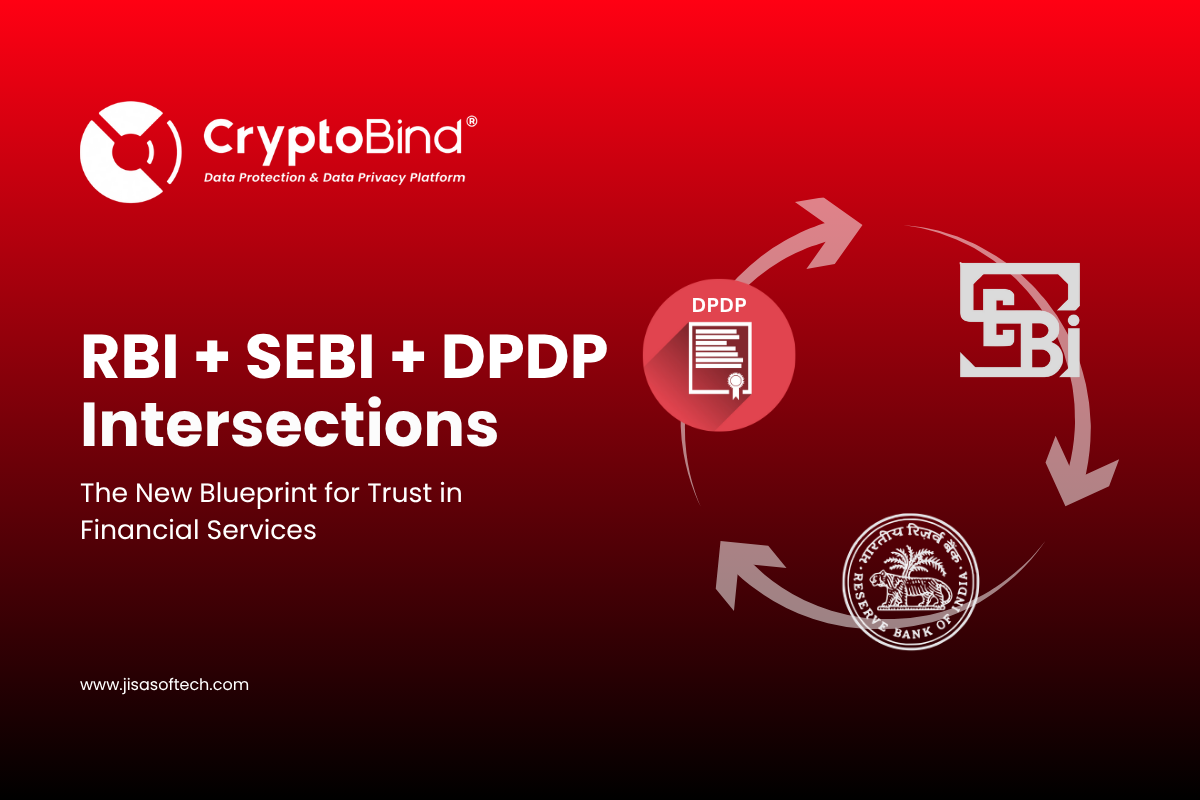
The Triad of Compliance: RBI, SEBI, and DPDP
RBI (Reserve Bank of India) continues being the keeper of monetary stability and system security. Its frameworks are about risk management, postures of cybersecurity, and operational resilience. The requirement of a high level of customer authentication, the imposition of data localization standards among the payment operators, RBI is establishing a sense of direction on how financial institutions deal with sensitive financial information.
SEBI (Securities and Exchange Board of India), regulates the securities market and provides transparency, protection and fair play to the investors. By concentrating on cybersecurity when it comes to exchange, mutual funds and intermediaries, SEBI has transcended pure financial disclosures and incorporated cyber-risk disclosures and incident reporting.
The Indian first ever comprehensive data protection law, the DPDP Act 2023, is currently providing a third tier to the puzzle of compliance. It provides Data Principals (customers) with a right to understand how their data is used, request correction, and deletion. In the case of financial institutions, it implies well-developed consent systems, legal data processing, and evidence-based compliance, not only to the regulators but also to the very customers.
Where These Frameworks Overlap
The overlap between RBI, SEBI, and DPDP is most visible in three areas:
- Data Handling and Storage – The localization policies of RBI already mandate payment information to remain in India. DPDP also imposes legal limits on lawful processing and retention, and therefore compliance is not only a security requirement, but also a legal requirement.
- Cybersecurity and Breach Notification – The current cyber disclosure policies that are set by SEBI and the incident reporting regulations that are enacted by RBI now have to live alongside the 72-hour breach notification requirement by DPDP to the Data Protection Board. This requires coordinated playbooks of IT, compliance, and legal units.
- Customer Trust and Transparency – All three frameworks are in favor of increased transparency. It could be the push to fair digital lending by RBI, the quest to disclose better by SEBI, or the focus on privacy notices by DPDP – the trend is obvious: place the customer first.
The Strategic Opportunity for Financial Institutions
Rather than seeing these as isolated compliance obligations, forward-thinking financial institutions can approach them as an integrated trust framework.
- Operational Synergy – Building common controls for data classification, encryption, and audit trails can help meet all three regulatory requirements at once.
- Brand Differentiation – Companies that show visible commitment to privacy and security can convert compliance into a competitive edge.
- Global Readiness – With GDPR-like requirements in DPDP, Indian firms can also improve readiness for cross-border operations and partnerships.
Where Technology Partners Like CryptoBind Fit In
A strong compliance posture cannot rely on paper policies alone – it needs robust cryptographic infrastructure. This is where CryptoBind’s Cloud HSM with Signing Service becomes critical.
CryptoBind provides dedicated, FIPS 140-3 certified virtual HSM instances hosted in secure data centers, allowing financial institutions to:
- Securely generate and store signing/encryption keys for compliance with RBI and SEBI cybersecurity mandates.
- Implement consent-based digital signing of customer documents, aligning with DPDP’s lawful processing principles.
- Maintain complete audit logs of cryptographic operations, supporting incident response and regulatory reporting.
By integrating CryptoBind’s REST API–based HSM and Signing Service, financial institutions can achieve compliance by design, ensuring that every transaction is secure, auditable, and legally defensible – without building the infrastructure themselves.
Looking Ahead: Convergence as a Competitive Advantage
The RBI, SEBI and DPDP requirements do not mark the transitional stage, but they form the new normal of financial services in India. Leaders should not operate in an environment where every regulation is a checkbox practice, but rather they should integrate compliance initiatives to unleash operational efficiency and customer confidence.
The adoption of technology and in particular the awareness of secure key management, digital signature and automated audit logging will be the determining factor. The victors would be those who make privacy, security, and openness a part of their DNA, and will make regulation a commercial distinction.
This trio of compliance will be the future of trust as financial services proceed to go digital. It is no longer whether industry leaders must adapt or not – it is how fast they can make strategy, operations and technology fit this new reality.