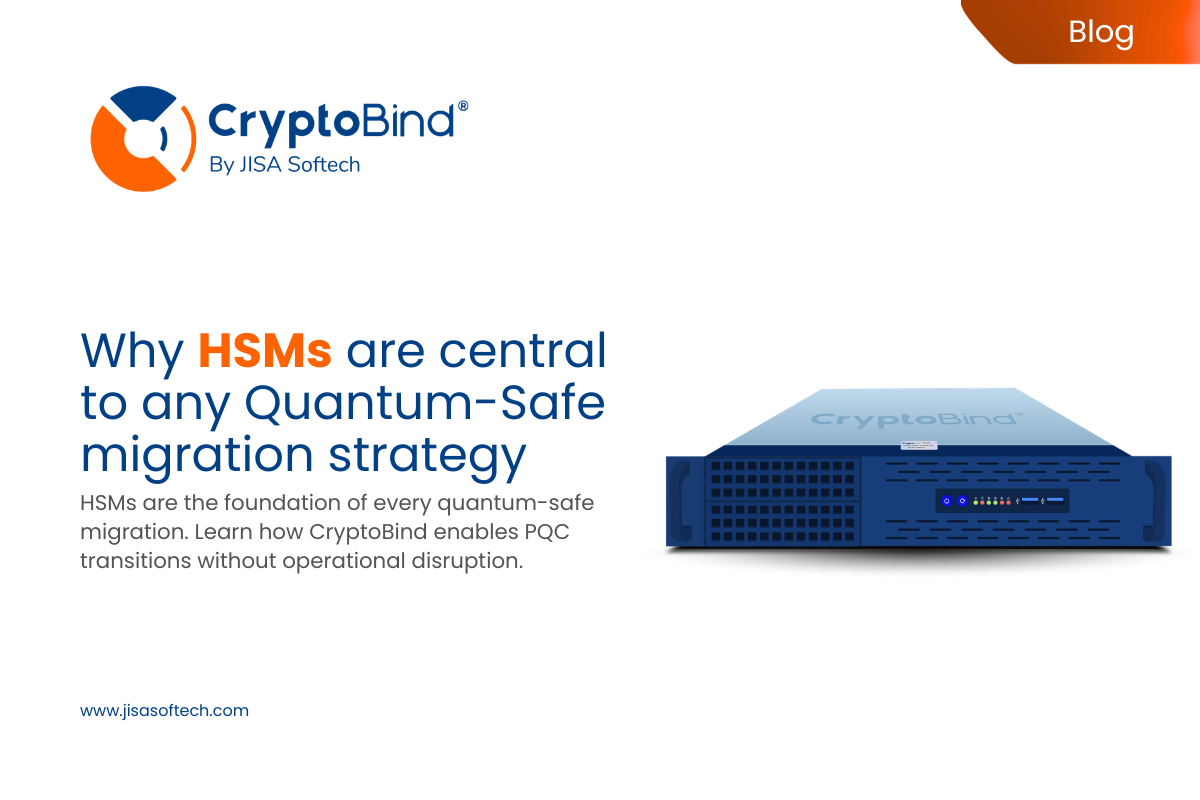
Why HSMs Are Central to Any Quantum-Safe Migration Strategy
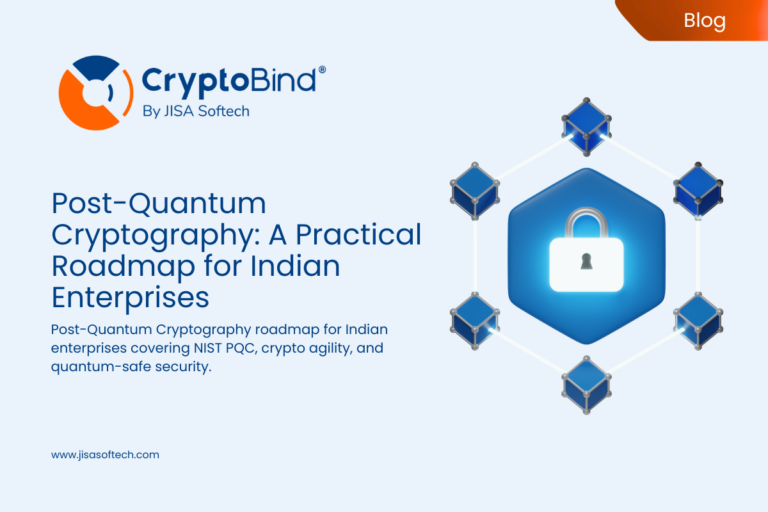
In August 2024, NIST finalised its first set of post-quantum cryptographic standards, ML-KEM, ML-DSA, and SLH-DSA, marking a watershed moment for enterprise security. But despite this clarity in regulation, the exposure of most organisations is still high. The danger, however, is not only in the future: adversaries are making what’s known as a “harvest now, decrypt later” (HNDL) attack, meaning they capture encrypted data now, only to decipher it at a later time when a powerful enough quantum computer is available.
The switch to a quantum secure algorithm is not something CISOs and cryptographic architects will be on the roadmap any time soon. It’s an on-going operational need.
At this point, though, where many migration strategies get bogged down is when the issue is not on how to find the correct post-quantum algorithms. The challenge is one of realizing a secure, audit trail, and non-disruptive migration of a distributed, complex cryptographic estate. This is where Hardware Security Module (HSMs) become more than necessary.
Table of Content
What Makes HSMs Structurally Unique in a PQC Migration
Operational Continuity: The Migration Case Study Framework
CryptoBind’s PQC-Ready Architecture: What Differentiates It
The Strategic Imperative: Start With the Hardware Layer
What Makes HSMs Structurally Unique in a PQC Migration
A Hardware Security Module (HSM) is a dedicated tamper-proof device that is used to create, secure, and control cryptographic keys under a hardware environment. Unlike Software based Key Management Systems, the HSMs provides the following properties that become critical in the algorithm transitions: It keeps the private key never exists outside the hardware boundary in the same way in which it is never stored in plain-text in memory.
In the context of a quantum-safe migration, HSMs offer three structural advantages that no software solution can replicate:
1. Algorithm Agility Without Key Exposure
Post-quantum migration requires organisations to support multiple cryptographic algorithms simultaneously, classical algorithms like RSA and ECC alongside new PQC standards, during what the industry calls a “crypto-agile” transition period. CryptoBind HSMs are engineered for exactly this. Their firmware architecture supports hybrid key pairs, enabling both classical and post-quantum algorithms to operate in parallel within the same hardware boundary.
This means organisations can validate PQC operations in production environments without retiring existing infrastructure, eliminating the forced choice between security and continuity.
2. Centralised Key Lifecycle Management at Scale
One of the most underestimated challenges of PQC migration is key lifecycle complexity. Post-quantum algorithms like ML-KEM and ML-DSA operate with significantly larger key sizes and different performance profiles than their classical counterparts. Managing this at enterprise scale, across thousands of certificates, TLS sessions, code-signing workflows, and encrypted storage volumes, demands centralised governance.
CryptoBind HSMs provide a unified key management plan that abstracts algorithm complexity from dependent applications. Security teams can rotate, retire, and provision post-quantum keys through a single auditable interface, without requiring changes to upstream application logic. This decoupling is foundational: it means migration velocity is no longer constrained by application re-engineering timelines.
3. Tamper-Evident Audit Trails for Compliance and Governance
To meet the regulatory requirements for FIPS 140-3, eIDAS 2.0, and standards about quantum readiness (such as ENISA, CISA), concrete measures need to be put in place to guard cryptographic operations. CryptoBind HSMs keep a cryptographically signed audit log, a tamper-evident record of all key operations, generation, usage, export and destruction; giving the evidentiary chain compliance audits required.
This isn’t just good business practice in a migration environment. That is the assurance of operation: A security team can have a hardware-backed guarantee that legacy keys have been eliminated and that post-quantum operations have been properly instantiated.
Operational Continuity: The Migration Case Study Framework
Imagine a financial organization running the PKI infrastructure for which it supports authentication, transaction signing, and Inter-Bank communication. A rip and replace migration to PQC would mean having to apply changes to certificate authorities, OCSP responders, HSM firmware and hundreds of dependent application integrations at the same time. The risk of operation is huge.
The migration methodology changes completely with CryptoBind HSMs as the anchor. The HSM serves as a cryptographic abstraction layer, providing a common API masking surface for lower level systems and internally handling the handling of classical vs. post-quantum key material. There is a possibility to issue and validate hybrid certificates (using classical ECDSA with ML-DSA) without changing applications. However, endpoints relying on legacy systems can’t sign and operate with PQC signatures yet, the quantum-safe component kicks off right away on endpoints capable of supporting PQC!
This staged migration model enabled by HSM-resident hybrid key pairs is precisely what NIST and BSI recommend in their PQC migration guidance. It eliminates the binary choice between operational continuity and quantum readiness.
CryptoBind’s PQC-Ready Architecture: What Differentiates It
Not all HSMs are equally positioned for post-quantum migration. CryptoBind’s architecture was designed with crypto-agility as a first principle, not a retrofit. Key differentiators include:
- NIST PQC Algorithm Support: Simultaneous classical and post-quantum key generation in a single HSM operation, and hybrid TLS, PKI and code signing.
- Hybrid Key Pair Generation: Simplified hardware acceleration for lattice & hash-based operations for post-quantum algorithms, which are highly expensive computational tasks.
- High-Throughput PQC Operations: Optimised hardware acceleration for the computationally intensive lattice-based and hash-based operations that underpin post-quantum algorithms.
- Zero-Disruption Firmware Updates: Field-upgradeable firmware with cryptographic integrity verification, ensuring algorithm support can evolve without hardware replacement cycles.
- Unified API Compatibility: PKCS#11, JCE, and CNG interface support, enabling integration with existing cryptographic middleware without application refactoring.
The Strategic Imperative: Start With the Hardware Layer
No matter how you approach the problem from the top of the stack, at the application-level, post-quantum migration strategies all face the same challenge: the key management infrastructure cannot keep up with the threats’ speed of change. The inverse approach anchoring the migration in HSM infrastructure first provides the stable, hardware-attested foundation from which every layer of the cryptographic estate can be progressively updated.
CryptoBind HSMs do not merely accommodate post-quantum algorithms. They operationalise quantum-safe migration as a continuous, auditable, non-disruptive process, which is the only kind of migration that enterprise security programmes can realistically execute at scale.
The quantum threat has a timeline. Your migration strategy needs one too and it needs to start in hardware.